


HISTORY
A Brief History
The Episcopal Church in Williamsport had its beginnings as a mission church established by St. James, Muncy. The first Episcopal Church in Williamsport was Christ Church, established in 1840 at a time when there were only three Episcopalians in the city!
In 1862, the city population was only 5,000 people, but was soon to grow due to the arrival of Peter Herdic in 1853. As the city expanded westward, The Rev. Moore, Rector of Christ Church, opened a church school behind the First Baptist Church to serve families in the West End.
By 1865, planning was begun for a second Episcopal Church. The Rev. Spackman was called on January 1, 1866 to serve Trinity Parish, which had been holding its first services at Price Methodist Episcopal Chapel. At that time, a chapel was built on Vine Avenue, The Chapel in-the-Fields.
Peter Herdic, a member of the church, offered to deed the Vestry a plot of ground at the corner of Fourth Street and Trinity Place. The plans for the church were drawn by Fred G. Thorne, a local architect. Eber Culver, another local resident, designed the spire. The cornerstone was laid in place in 1871.
One peculiar mystery is the location of the cornerstone. When the church was built, the northeast corner was in the approximate area of the organ chamber. When the parish house and chapel were added onto the church building in 1913-1914 the disposition of the cornerstone was not placed in any surviving church records. Whether it was left in its place and is now buried somewhere in the foundation of the building, or whether it was removed is an unsolved mystery.
In spring 1875, Herdic announced that he would complete the building of the church. The parish had raised $15,000 by that point and Mr. Herdic added $80,000 of his money to complete the job.
The first service was held on Christmas Day 1875.
Tuesday, Feb. 22, 1876, was consecration day. "When services commenced there was not even standing room," reported the Williamsport Daily Gazette and Bulletin. Judge John W. Maynard read the deed in which Herdic granted the church and land to the Trinity Corporation for the sum of one dollar, on condition "that it is to remain a permanent site for the Protestant Episcopal Church, and the pews in the same are to remain forever free." The free pews were a noteworthy gesture. At that time, it was a common custom for churches to raise money by renting pews, the most expensive ones being at the front of the church.
The Rectory was built in 1884 for $10,000 on land given by Judge Maynard, who had also donated the chime and clock.
The Parish Hall and Chapel were built around 1913-1914 by the estate of Amanda Howard for $70,000.
The Parish Hall was originally a church lounge, called the "Colonial Room," an odd name choice since the architectural style of the Parish Hall is from the Craftsman period. A few remaining elements of this style are seen in the porch beams and wooden wall panels.
This building was given as a gift from the estate of Amanda Howard. Her portrait hangs in the office foyer and some adults have said that it used to scare them as children. In this foyer there was a box office window where tickets could be purchased for community events held upstairs in the banquet hall/gym. In fact, the first motion picture shown in Williamsport was shown in this facility.
The conditions of Mrs. Howard's estate were that this building be used as much as possible for community purposes, and it was a much-needed addition to the city, since there were very few facilities of this type. During the Great Flu Epidemic of the early twentieth century, people were housed here when the hospital became full.
One of the unfortunate things about the construction was that the church was built in the flood plain. During the Great Flood of 1936, the pews were completely covered with water in the Main Church.
On Sunday morning, February 13, 1977, an arsonist started fires in the Chapel and sanctuary of the Main Church. Fortunately, the Chapel fire was discovered by a neighbor and the Main Church fire had burned itself out. The Chapel interior and portions of the roof had to be rebuilt. Coincidentally there were three other fires in the city that morning, including one which destroyed Pine Street United Methodist Church.
The Chapel Columbarium was installed in 1990 and was renamed "The Chapel of the Resurrection." It was expanded in 2013.
The Exterior, Clock and Chime
The building stones for the project were quarried from Bald Eagle Mountain. The exterior doors were patterned after the church of the Holy Trinity in New York City. The symbol of the cross is everywhere. It can be found in the slate shingle design on the roof, doors, and even incorporated into the lights.
The spire of the tower that houses the clock and chime is 210 feet to the top and is the highest structure in Williamsport. It can be seen from a great distance in any direction.
The chime consists of 9 bells with a combined weight of 8,500 pounds. The large tenor bell weighs 2,300 pounds. It is the only one that can be swung. They were first played on December 25, 1875. Tunes can be played on the Clavier.
In 1794, when Cambridge University installed a clock in St. Mary’s Church in Cambridge, England, an 18-year-old music student, William Crotch, suggested that the automatic timing mechanism be made to ring variations of the principle motive of "I Know That My Redeemer Liveth" from Handel's Messiah. Later they were reproduced on the bells of the newly installed clock in St. Stephen Tower at the Houses of Parliament, and then throughout the world.
At Trinity, an automated system plays the Cambridge Quarters on 4 bells through a separate set of clappers. The Cambridge quarters are rung by a mechanism. They are the same as heard in London at the Clock Tower of the Palace of Westminster (Big Ben). Trinity had the first installation of this chime pattern in the U.S. in a public tower clock.
The clock faces measure 9 feet across. The clock strikes the hours on the tenor bell. The tenor bell can be swung by a rope pull. At one time the clock was run by weights suspended in the wells of the corners in the tower. In those days, a man was hired to wind the clock.
The clock and chime were turned off for several years pending funding for repair. They were repaired and a rededication was held in April 2010.
The Main Church
Nave - The body of the church is called the “nave” (from the Latin “navis” – meaning ship). It is called a nave because the church is often depicted in sacred art as a ship moving heavenward. The pews are like galleys and the members of the congregation are similarly “pulling together” in service. The pew design was taken from St. Thomas Church, NYC. The ceiling of Trinity’s nave looks like the inside of an upside-down ship.
Floor - The tile floor in the aisles is not original and was added sometime in the early 1900's.
Gablets - The very highest windows are called gablets and were put there for better ventilation.
Rood Beam - The rood beam was installed about 1917 as a memorial gift and eliminated what had been termed an “awkward” opening above the chancel steps. It was placed as a dividing line between the sanctuary and the congregation.
Pulpit - The brass and oak pulpit, with its prominent Pattee Cross, was a memorial dedicated on Easter Sunday, 1904. The wooden pulpit canopy is another memorial presented in 1919. The ceiling of pulpit canopies served as a “sounding board” to amplify speech before the advent of the microphone.
The Baptistery - The painting over the baptistery entrance (1929) depicts the Annunciation to the Shepherds of the Nativity of Our Lord. The original sketches were done by an artist of Lycoming County. The hills in the background resemble the hills around Bethlehem, but they are fields as seen from a highway near Halls Station. This mural was restored in 2009 by Michelle W. Mapstone.
The baptistery font dates to 1876, except for the cover and cross which were presented by the Altar Guild and the St. Agnes’ Guild in 1939. The eight-sided font is built of Buena Vista stone and symbolizes that Jesus was eight days old when he was circumcised and given his name.
Lectern - The brass lectern was a gift of the Sunday School children and was presented on Quinquagesima Sunday in 1884. That is the last Sunday before Lent - fifty days before Easter. The figure of an eagle with wings outstretched is used to symbolize the flight of the Gospel over the world.
The Altar - The sanctuary area is enclosed by the altar rail and is elevated one step, culminated by the high altar that sits three steps higher. The platform on which the altar rests is called the footpace or the priest’s step.
The middle step is the deacon’s step, and the lower step is the sub-deacon’s step. The cross on the high altar was given in memory of Louisa Weightman in 1884 (The Weightman family of Philadelphia acquired Peter Herdic’s holdings when his financial empire folded.)
The use of candles on the altar is an ancient practice in the church and is reminiscent of the time when the church was driven underground into the catacombs. The two end candles on the altar are the Eucharistic candles representing our Lord as the Light of the World in His two-fold nature, both divine and human. The other six candles (three on either side of the Cross) plus the cross represent the seven-fold gifts of the Holy Ghost: Wisdom, Understanding, Counsel, Ghostly Strength, Knowledge, True Godliness and Holy Fear.
The Organ - The enlarged chamber provided a century ago now houses its third organ. Built and installed by Austin Organs, Inc., it is an instrument of 2,031 pipes comprising three manual divisions and pedals arranged in 35 ranks and 2 extensions. The Great chest is mounted in the arch facing the Sanctuary; the Positiv and portions of the Pedal occupy the arch facing the Nave; and the Swell chest is enclosed in a box that opens towards both openings. All pipes displayed in the facades are mute and are revised from the previous casework. For the best advantage of tuning, the chest tops have been arranged at nearly the same level and are winded on the universal air system. There are 27 voices, or timbres, controlled by 35 registers, or stops. The console is the stop-key style and included in its appointments are a full complement of inter- and intra-manual couplers and a generous number of combination pistons.
The Parish Hall / Chapel
The portion of Trinity that was constructed as the Parish Hall/ Chapel consists of three levels.
The Gym Level - On this level are several offices and classrooms. Originally the kitchen was in the large room at the top of the stairway by the Chapel.
The gym area, at one time, had large wooden folding panels, which would form an auditorium and stage area. As mentioned earlier, the first motion pictures in Williamsport were shown here and patients from the Great Flu Epidemic were housed here. Today, various groups use the meeting rooms, and the gym is used for basketball, karate, fencing, and other events.
The Lower Level – Most of the lower level is rented by EPIC Percussion for office space and practice rooms.
The Parish Hall / Chapel Level – Here are located the social hall and kitchen, Chapel, Choir Room, Sacristy, Library Area, Rector’s Vesting Room, and the Church Office.
In the balcony of the Chapel is the Columbarium for cremains. The Columbarium consists of 138 individual niches.
The Rectory
The Rectory has not been used to house the rector and family for many years. It was rented to several non-profit businesses including the United Way and Uptown Music Collective. It was recently converted and is now being used as an Oxford House for women in recovery.
PARISH DIAL EXCERPTS 1876-1933
Click on an image to view full size
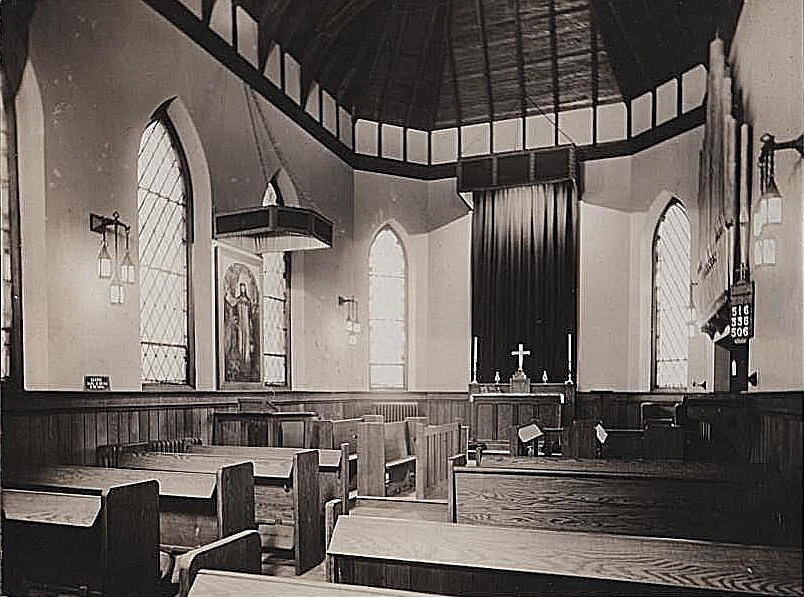 Chapel 1923
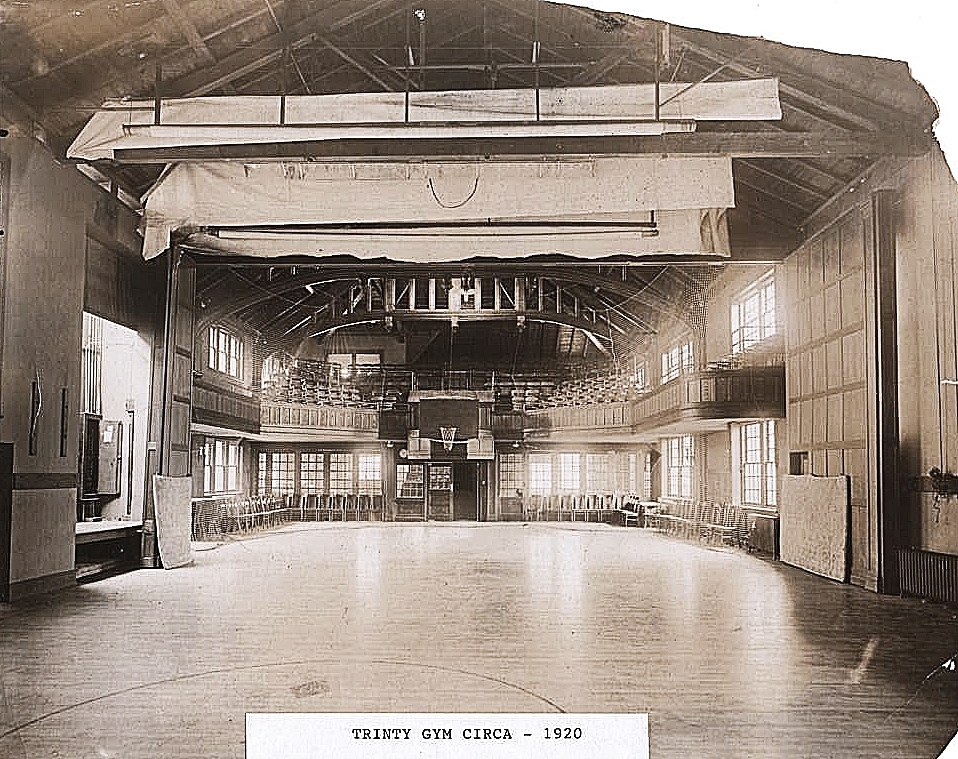 Gym 1920s
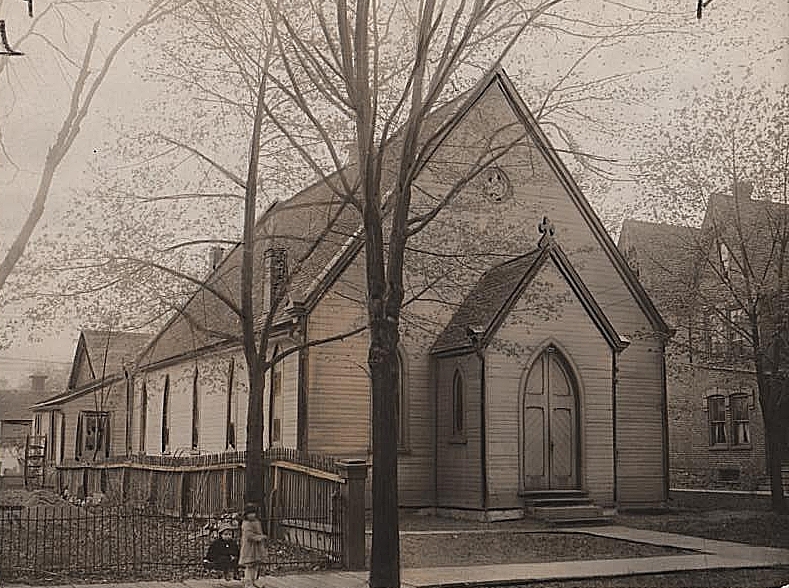 Chapel in the Fields
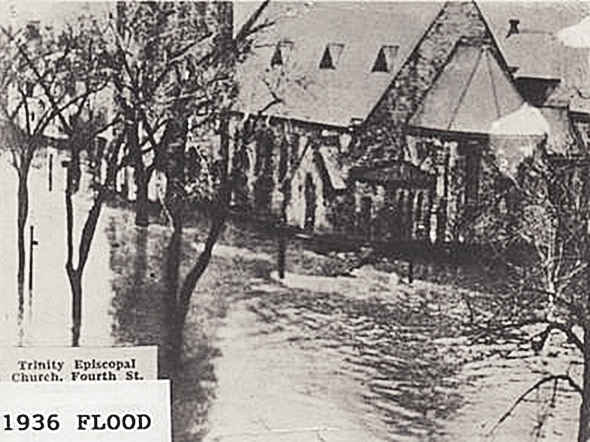 Flood 1936
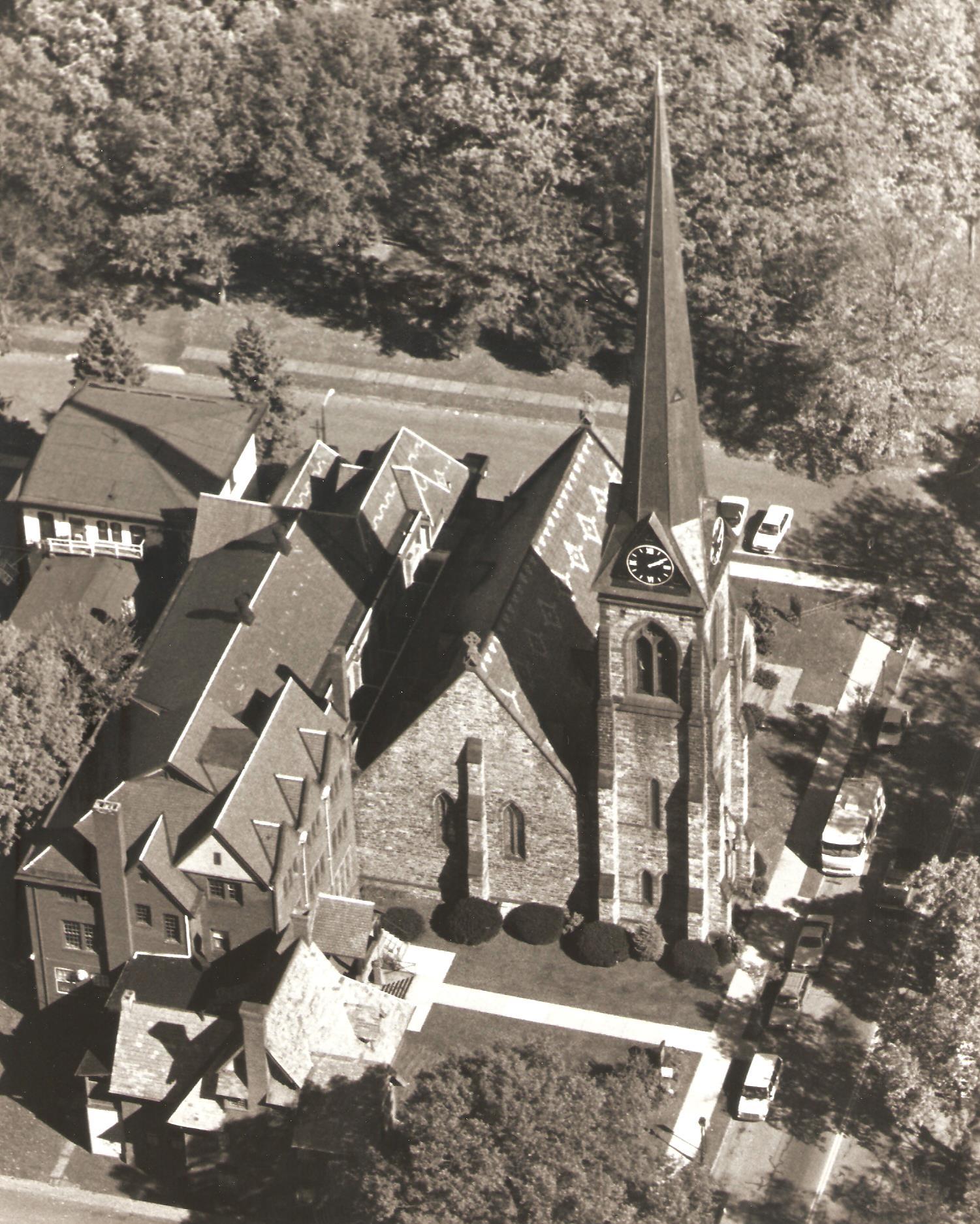 Aerial View
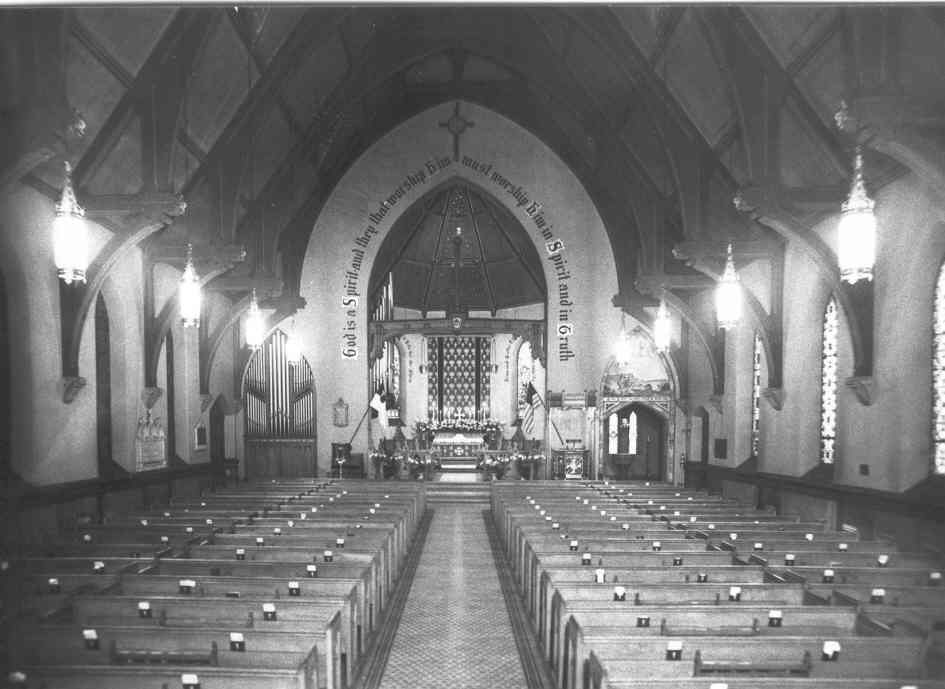 Lighting after 1936
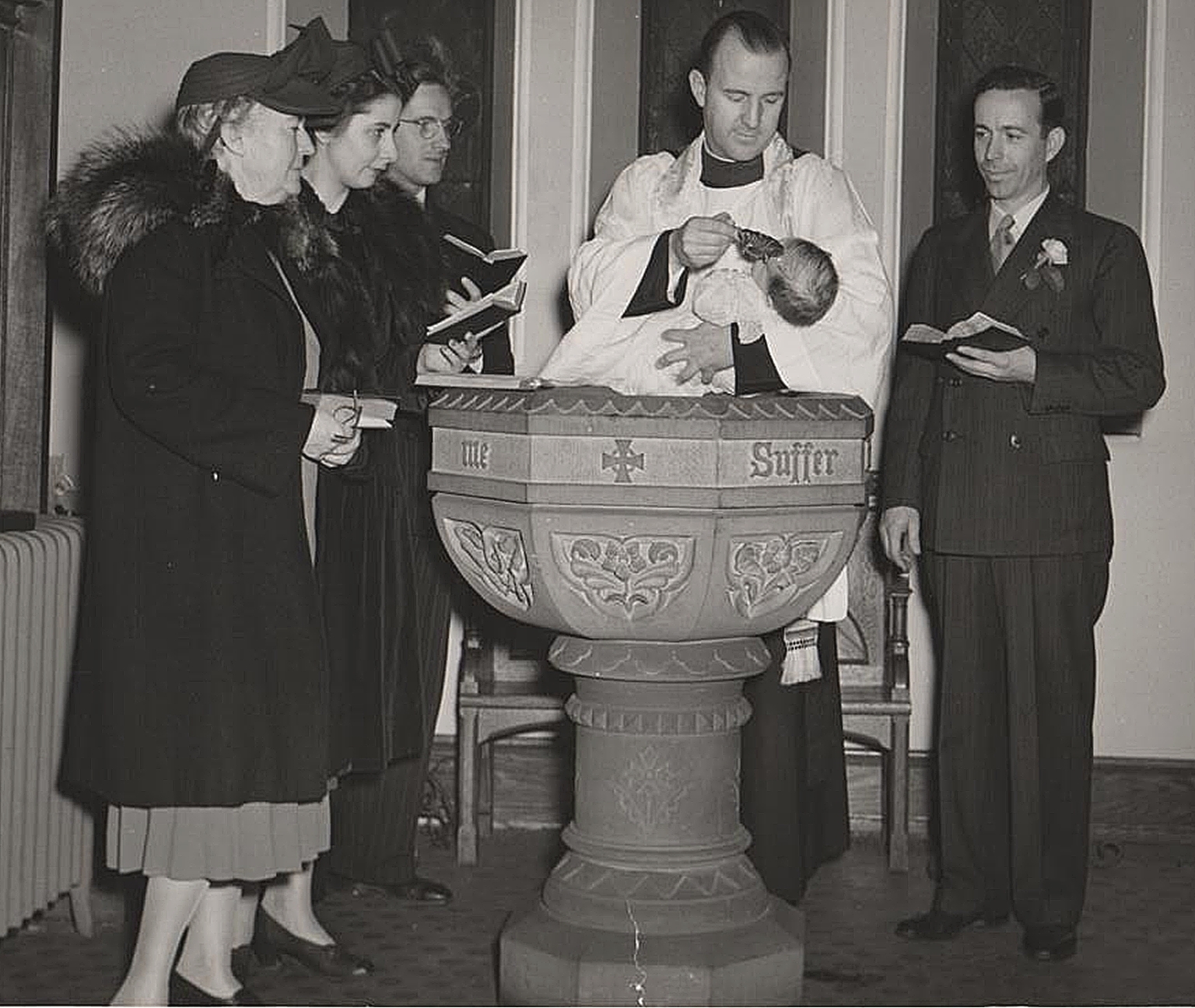 Baptism - Rev. Thomas
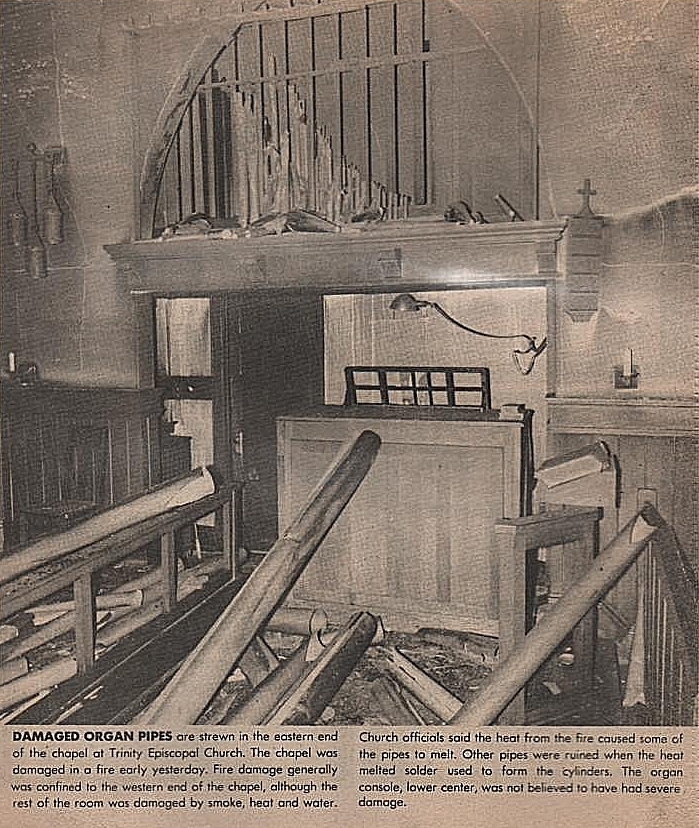 Chapel Fire 1977
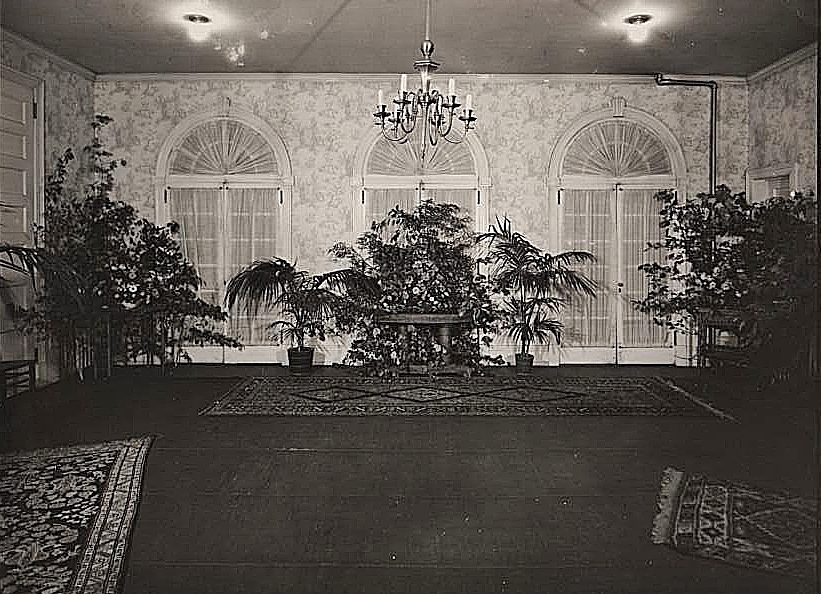 Colonial Room Lounge
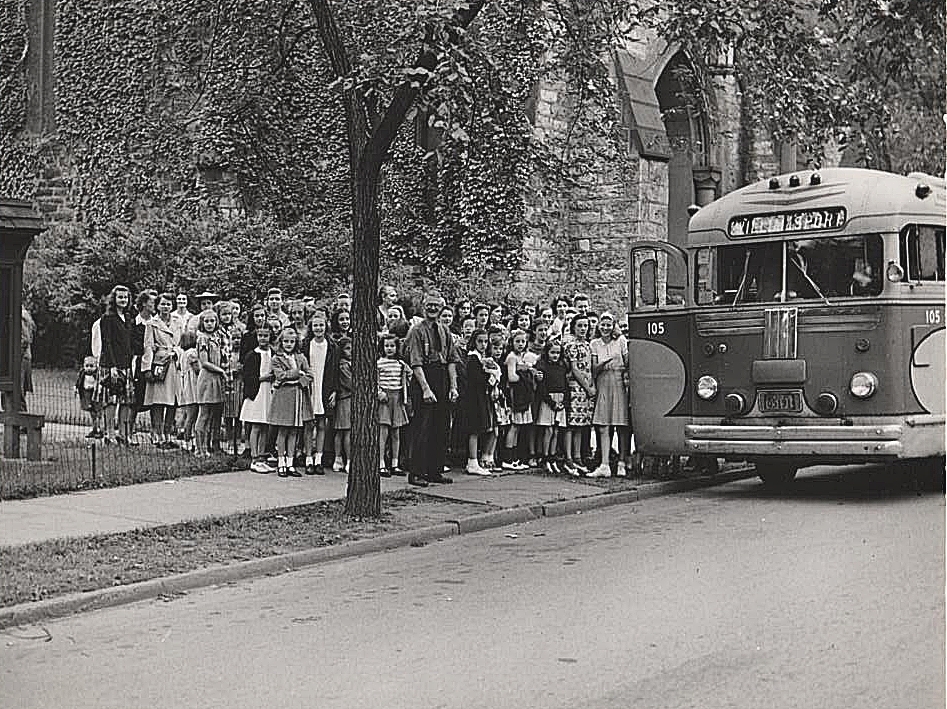 Youth of Trinity Field Trip
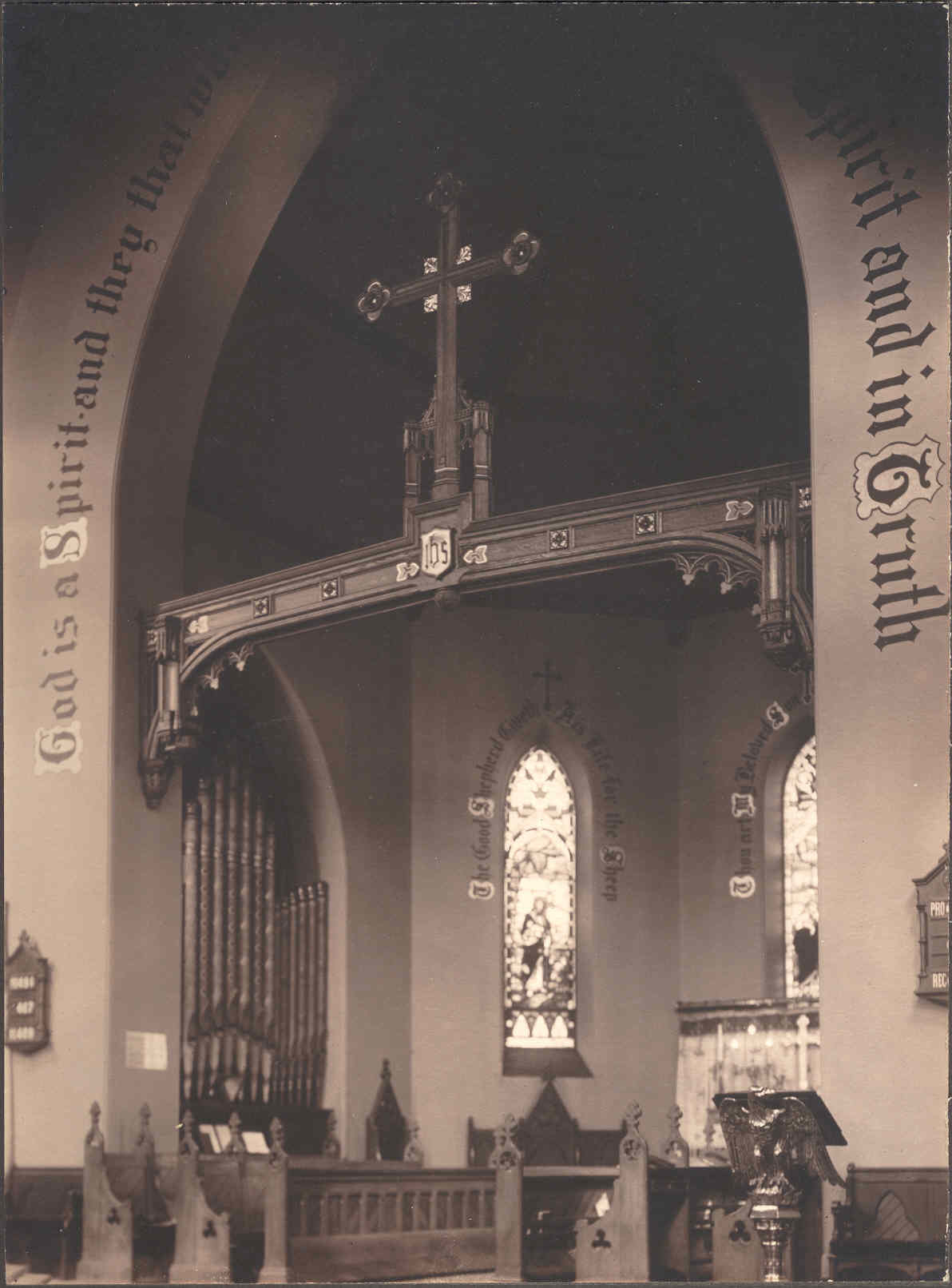 Rood Beam
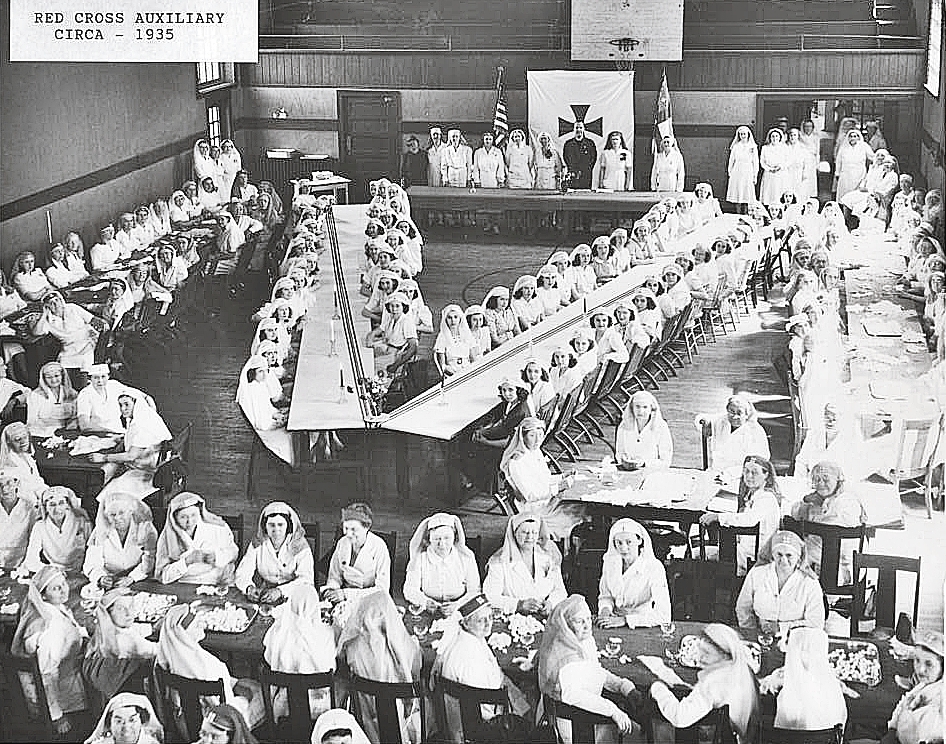 Red Cross Auxillary 1935
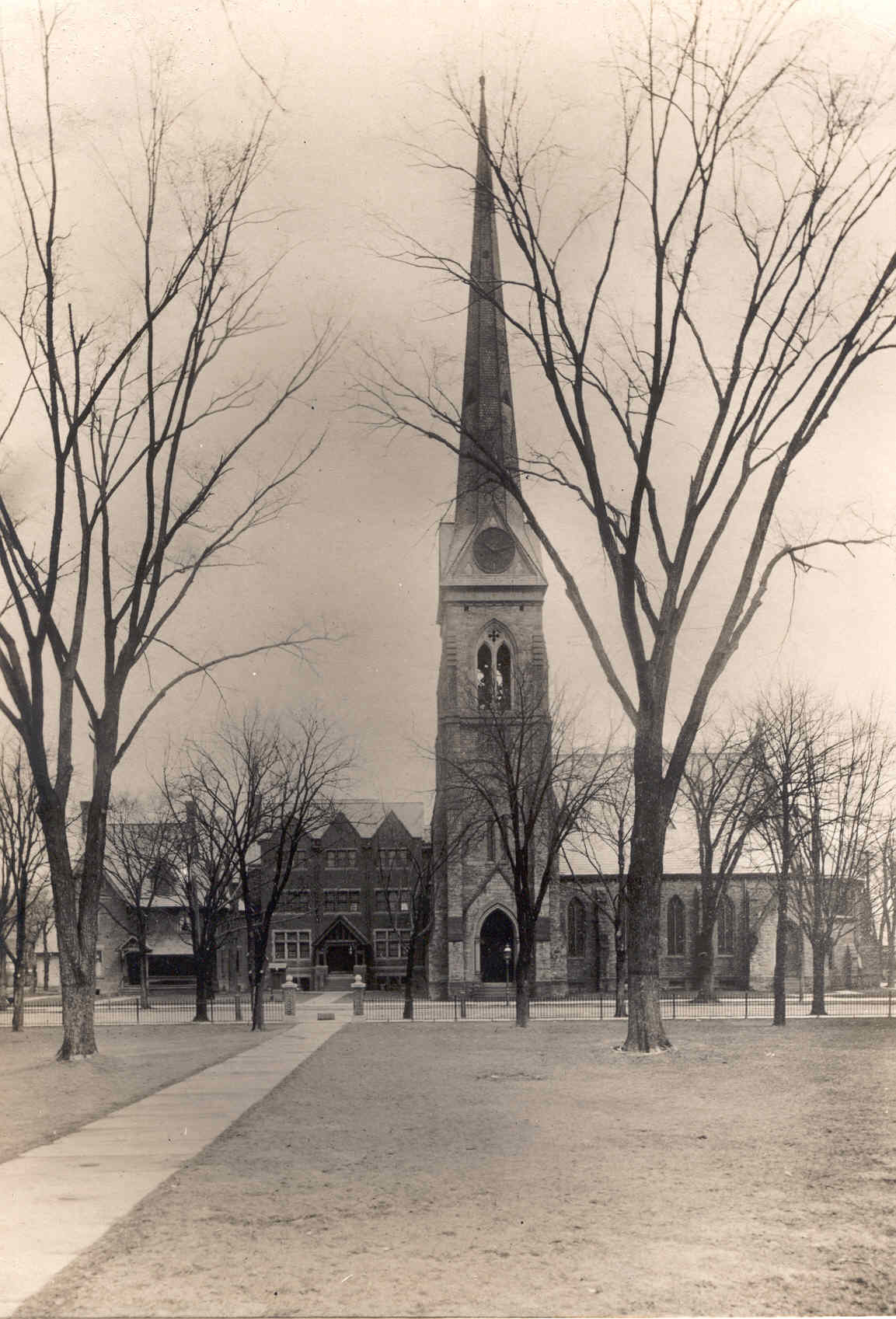 Outside View
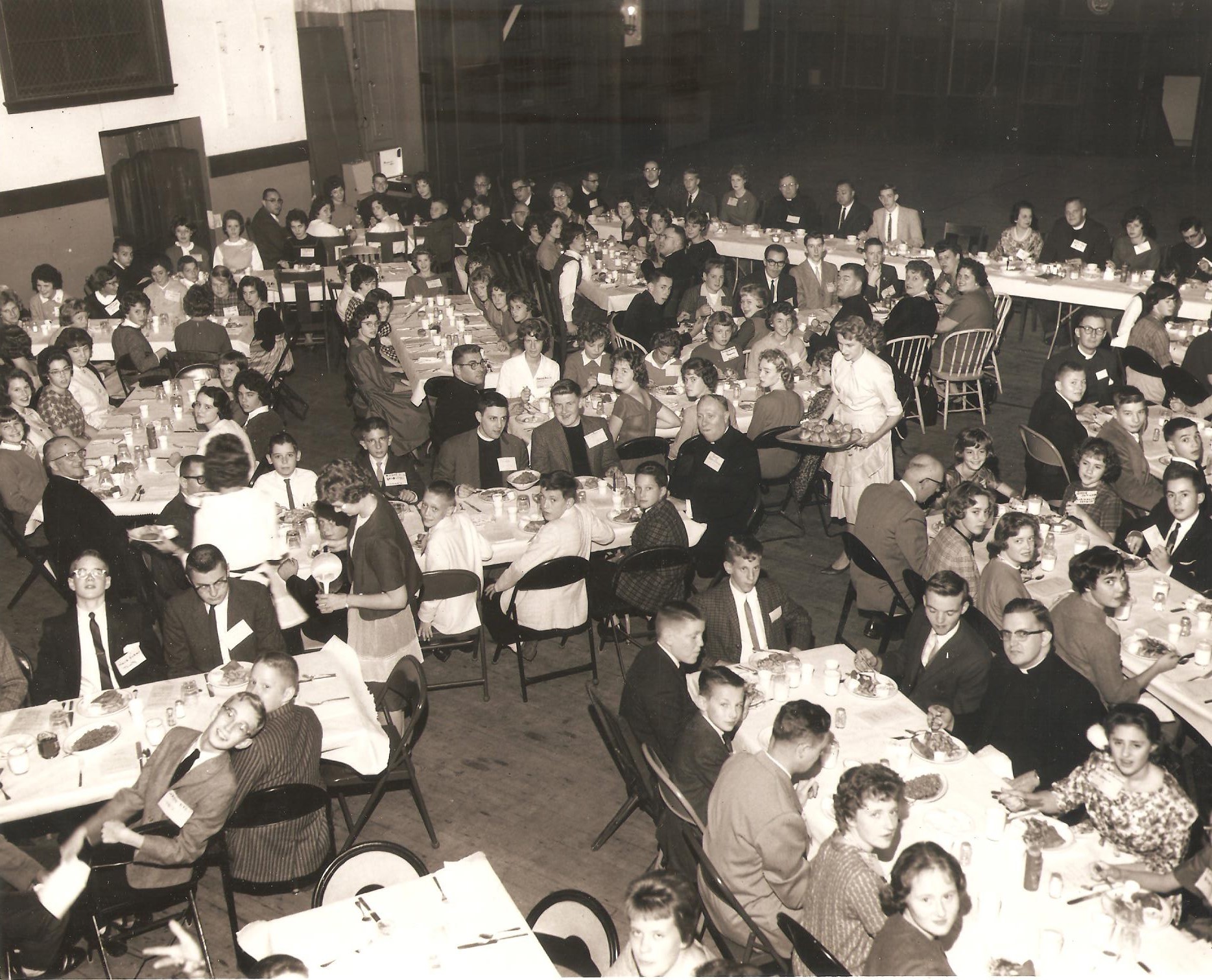 Meal in Gym
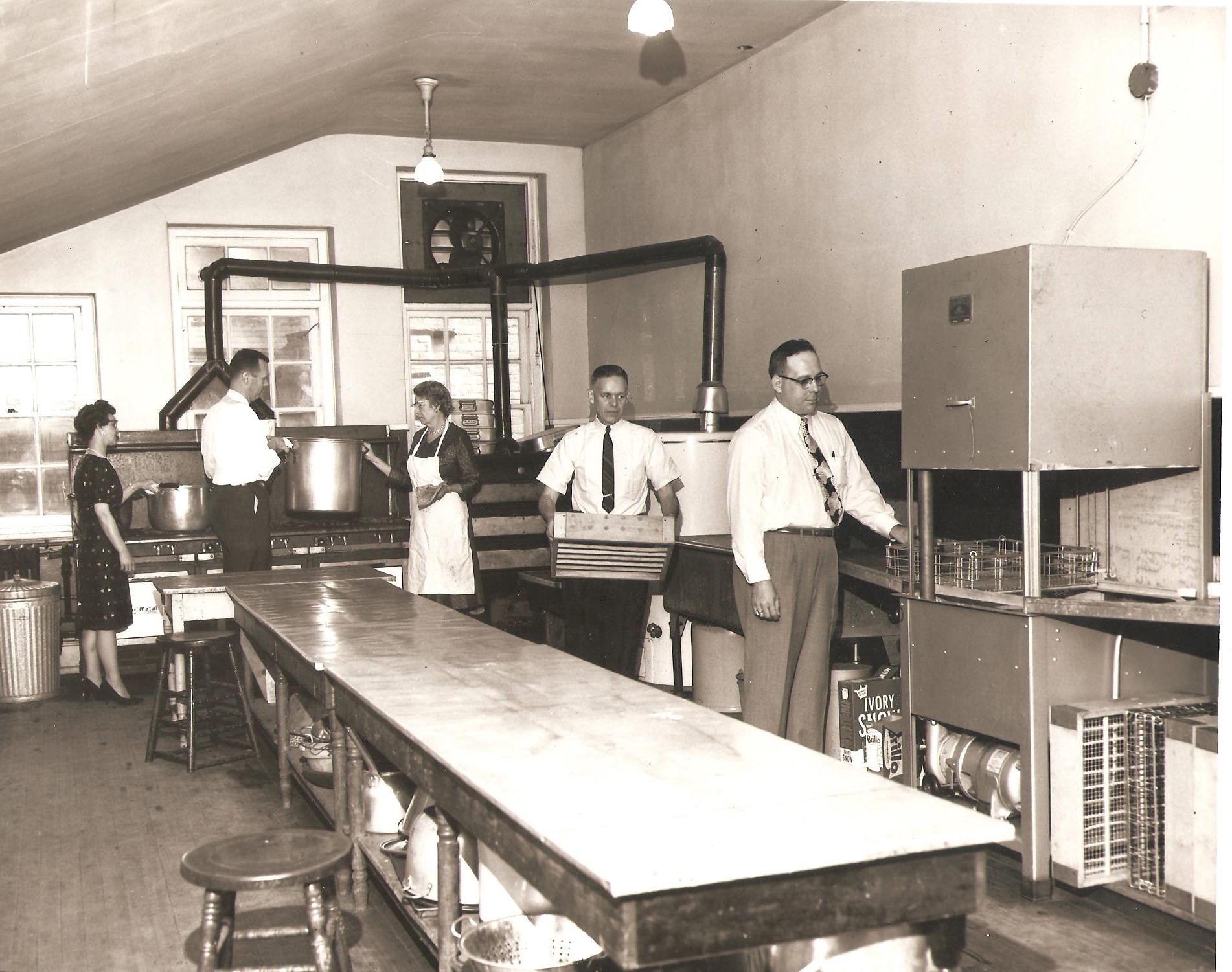 Kitchen
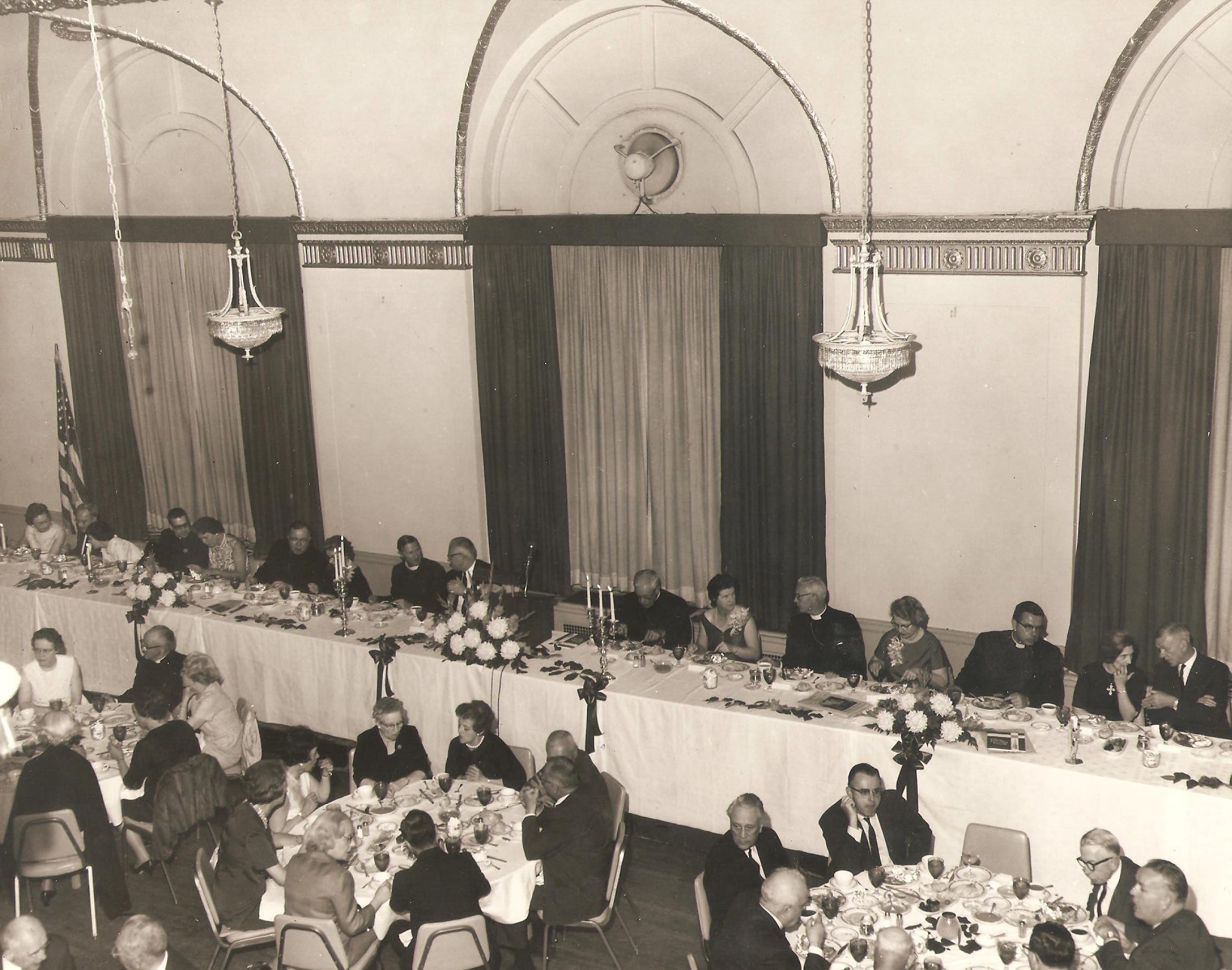 Dinner
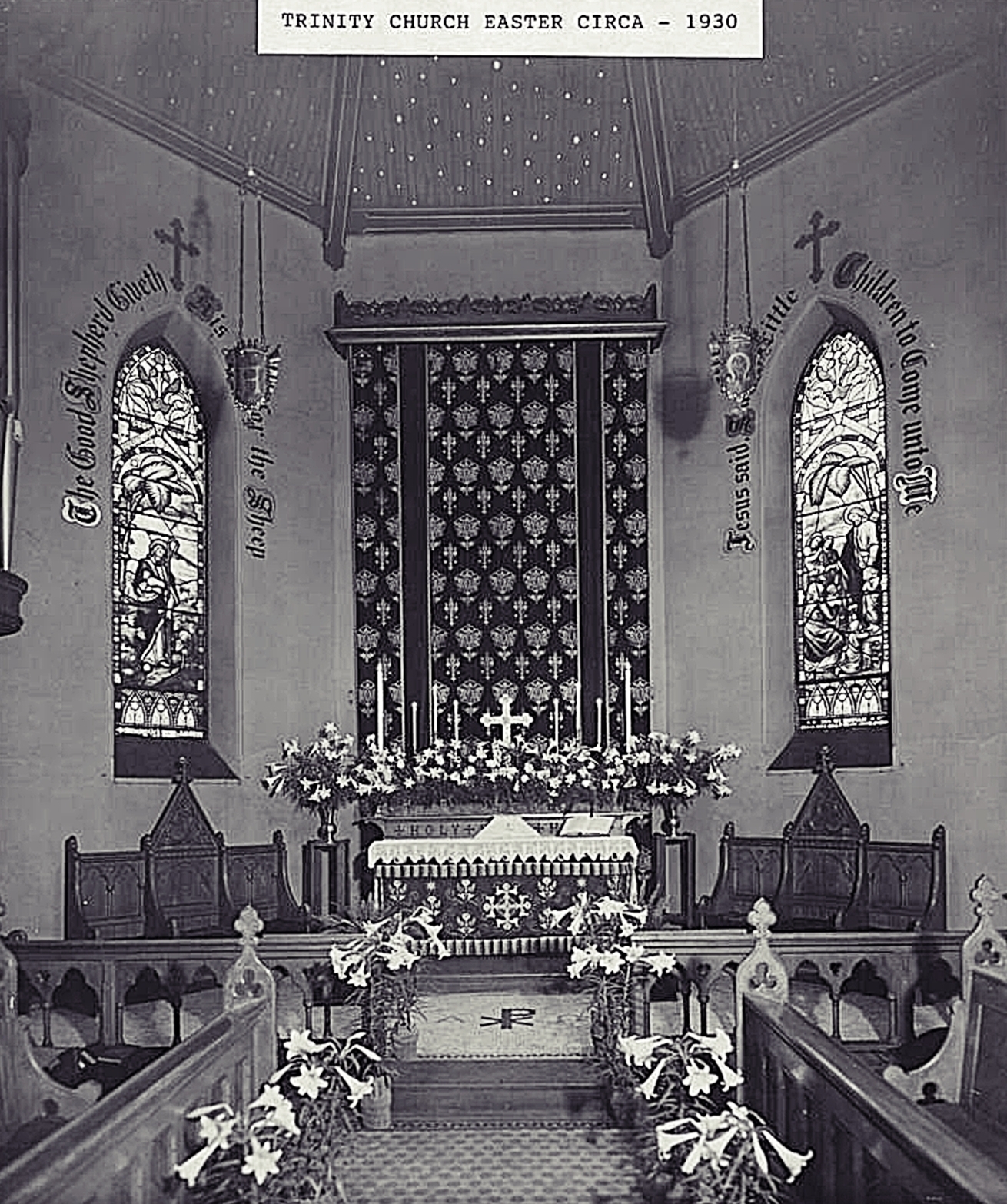 Easter 1930
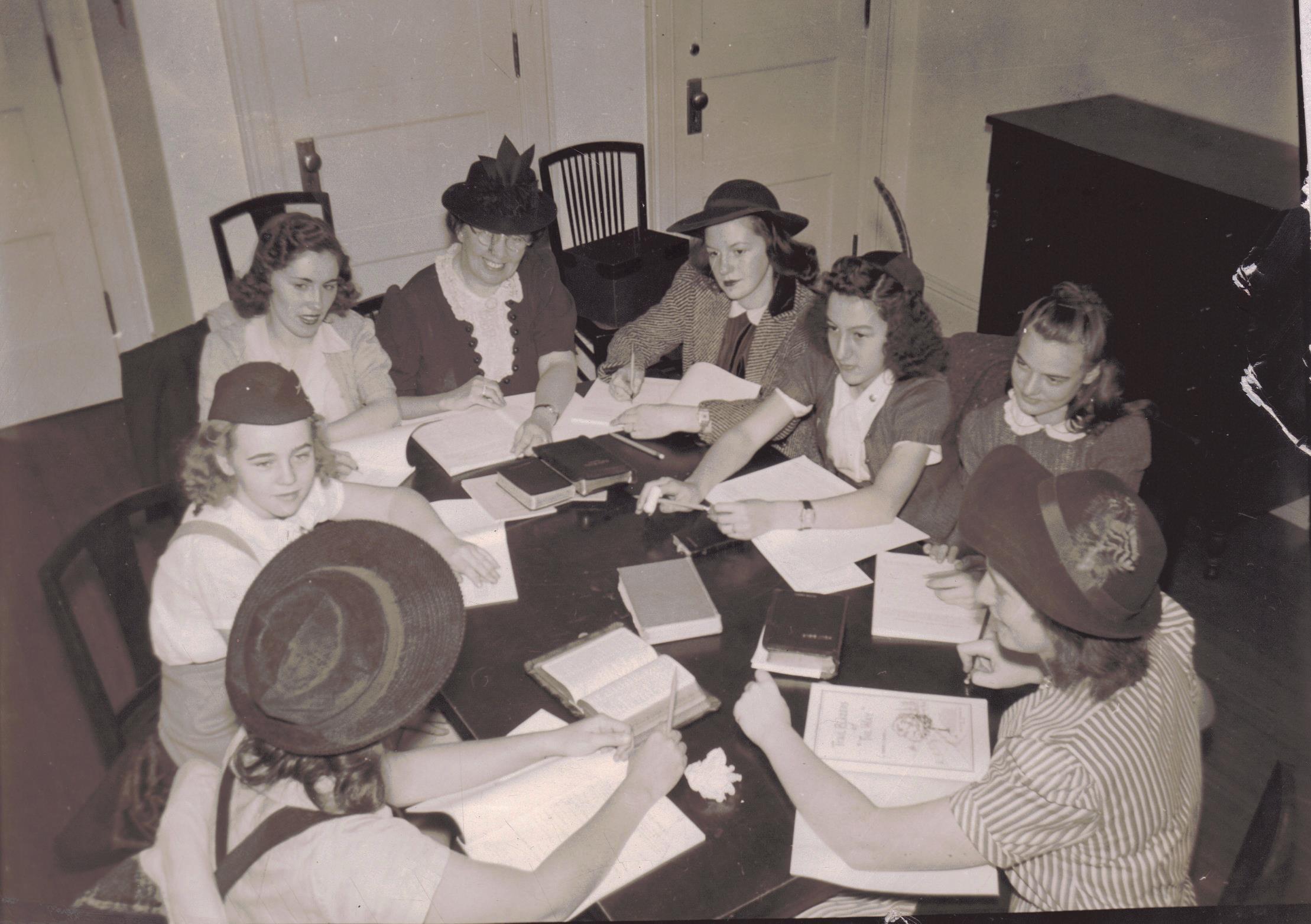 Women's Bible Study
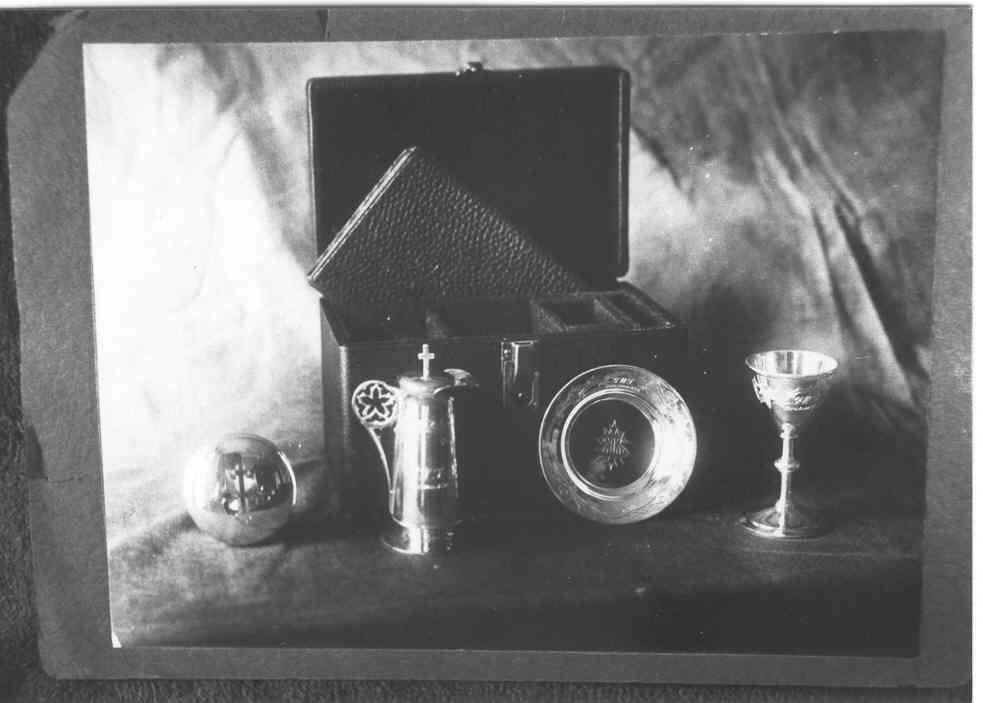 Communion Set
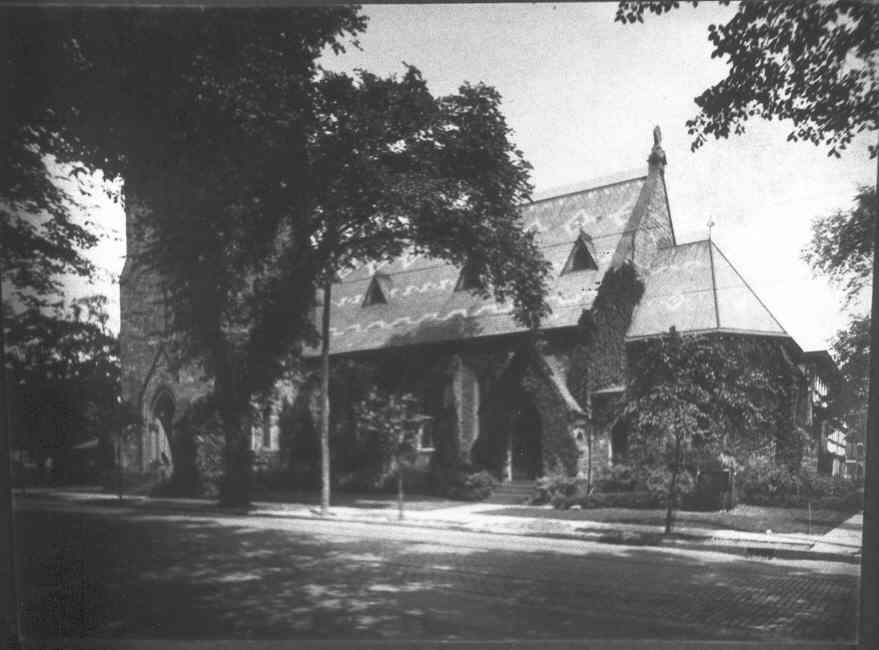 View from Ways Garden
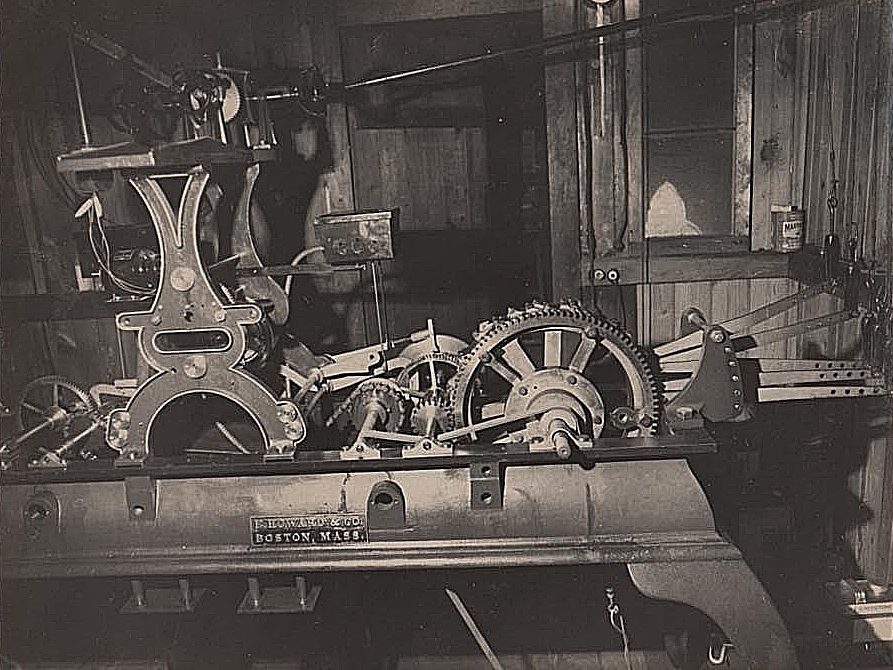 E. Howard Tower Clock
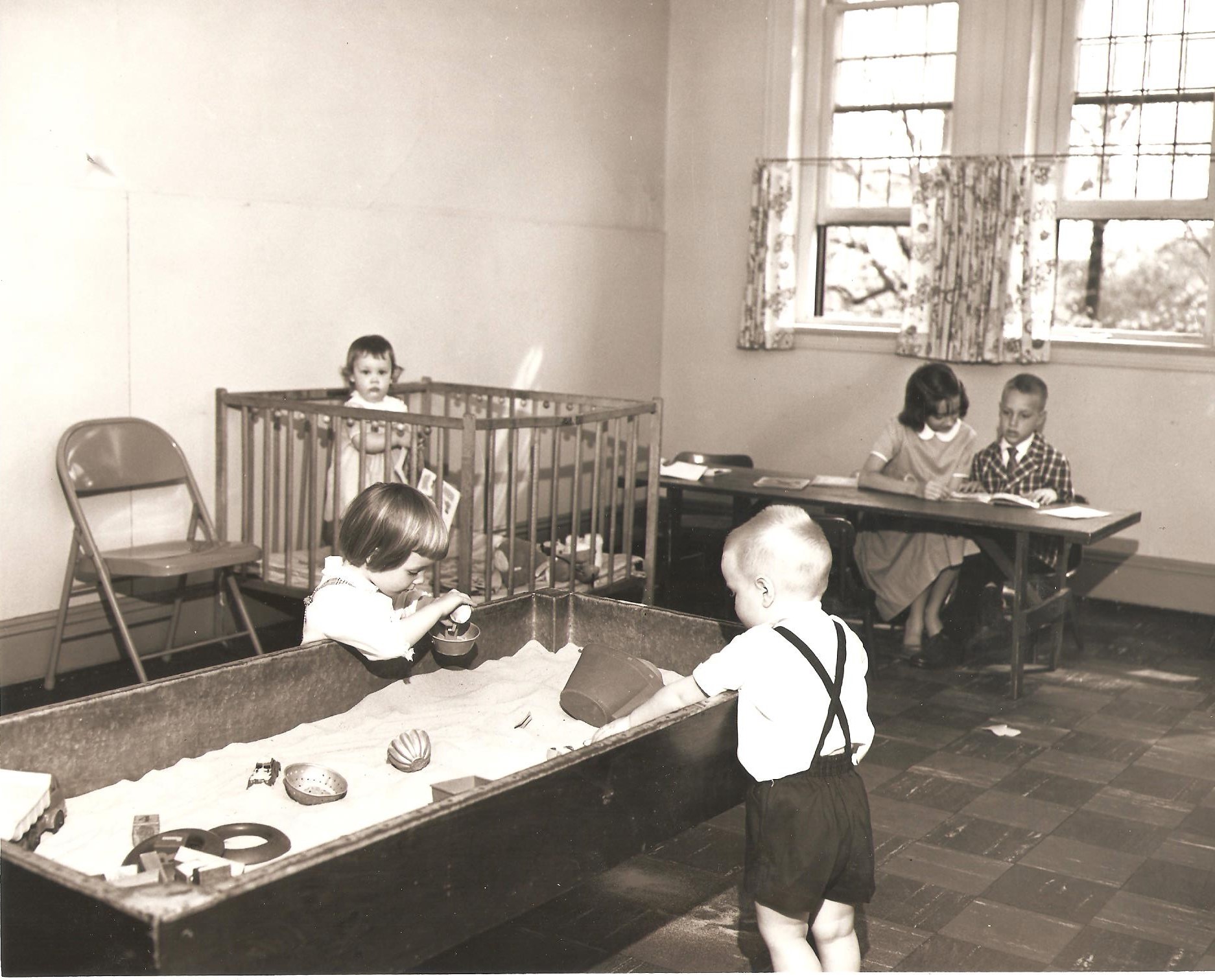 Nursery
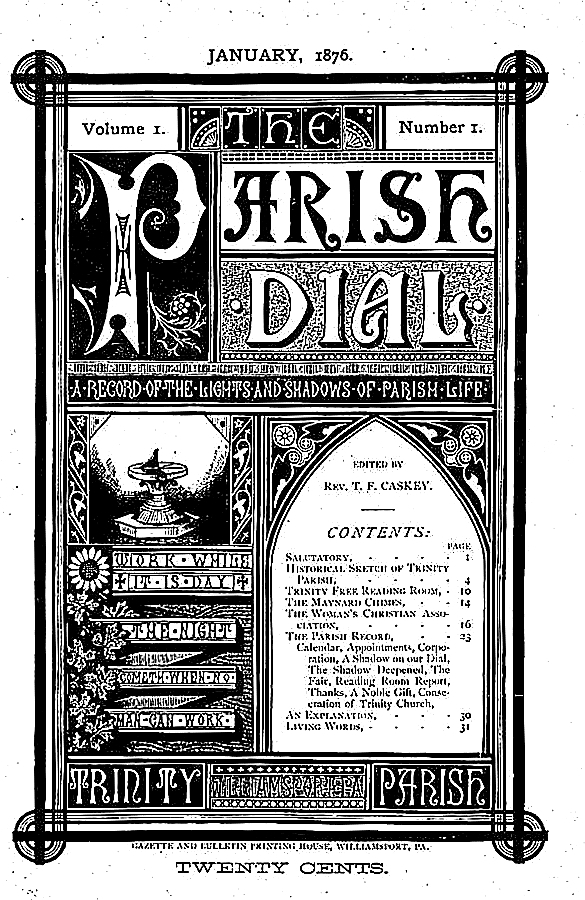 Parish Dial cover
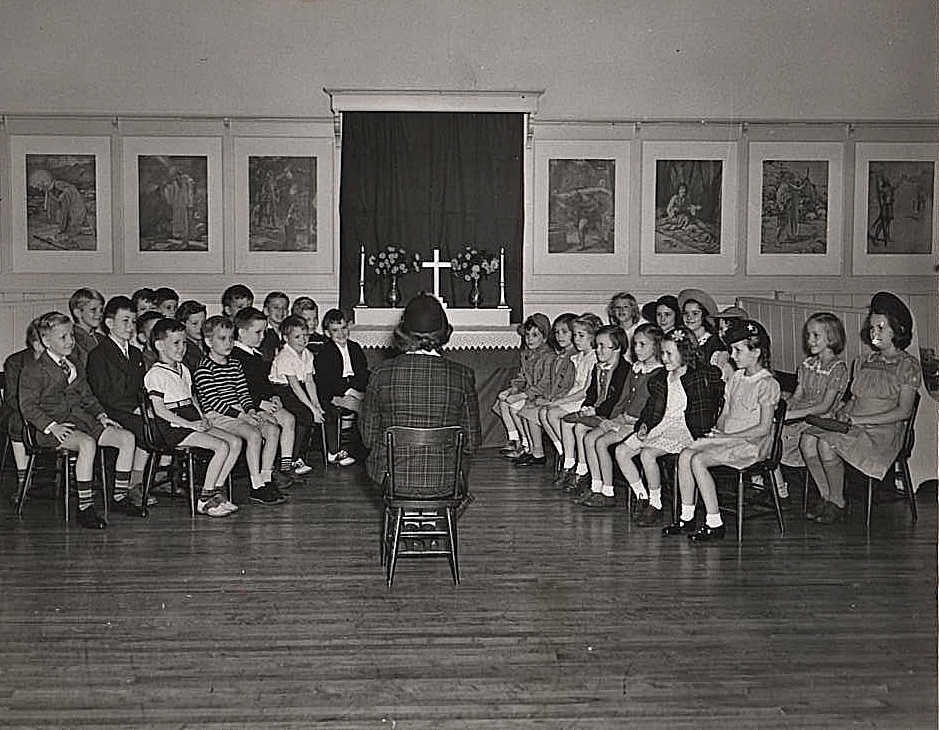 Sunday School mid-20th century